Change language:
DK
EN
Only selected posts available in Danish
In the decision of which funds to invest in, an important parameter is how well the fund can track the benchmark index. It is to be expected that the variance of how well a specific fund can track an index...
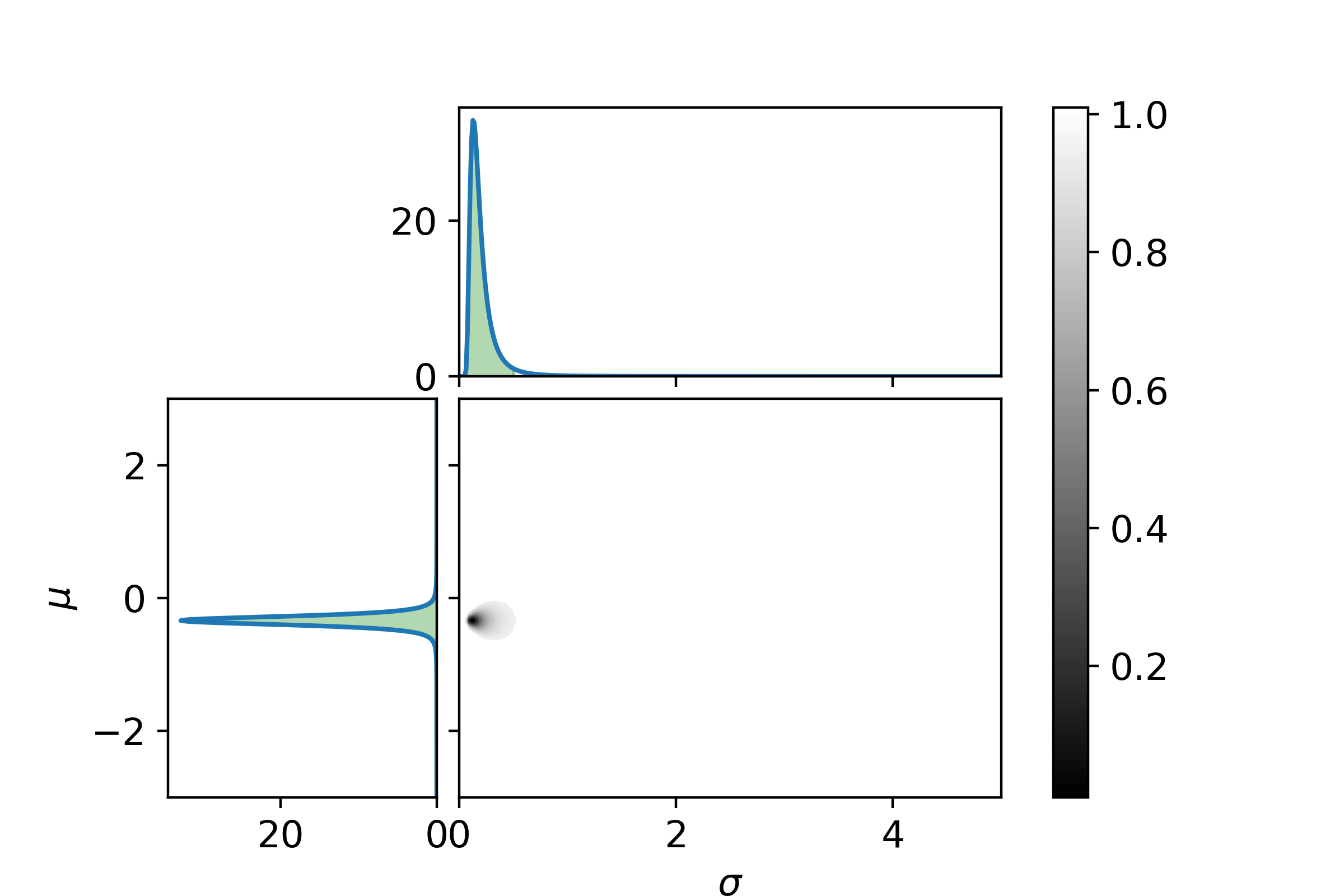
In the United Kingdom investors can invest in a class of bonds known as premium bonds. Premium bonds do not have a fixed coupon rate, but yield is instead distributed via a lottery. The prizes distributed as of May 2022...

Over the past 25 years the house prices have appreciated by a factor of ~3.5. But what drivers have been the primary for this price appreciation, and can this continue going forward? The primary drivers for appreciation of house prices...

Given the selection of Danish investment funds from Sparindex and Danske Invest, it can be difficult to see how different the funds are. As a measure of similarity, one can calculate the overlap between two funds. The overlap between fund...

In Denmark, all ETFs are taxed yearly by unrealized returns. On the other hand, some Danish investment funds are taxed by realized gain, if they fulfill some criteria of paid out dividends. The dividend paid out will be: earned dividends...

Many brokers (at least in Denmark), have a pricing model of \(q\%\) of the trading amount or a minimum of \(p\) euro. Given a fixed amount to invest every month, we might think it is best to accumulate the cash...

During education it is possible to take an SU loan (Danish student loan). If one takes an SU loan solely for investing, what can one then expect after the loan has been repaid? This will be investigated in the following...

Remember to check the web-scraped information yourself to make sure it is correct. Given lists such as SKAT’s positive list and Nordnet’s monthly savings, it can be hard to get an overview of costs and which indices the different ETFs...
Given an idea of how much one’s strategy returns per year on average, it can be useful to estimate what this corresponds to after tax and ongoing charges (ÅOP). This estimate differs between mark-to-market taxation and taxation on realisation. Derivation...

The equity savings account (ASK) has a low tax rate of 17%, but is taxed mark-to-market. In principle, taxation on realisation with share tax of 27%/42% could give a higher return over a long period due to compound interest. Here...

For a portfolio taxed on realisation, the portfolio value after \(y\) years is given by: \[D_{y}\left(k,\left\{ a_{i}\right\} \right)=k\cdot\prod_{i=1}^{y}\left(1+a_{i}\right)-s_{p,q,g,y}\left(k\cdot\prod_{i=1}^{y}\left(1+a_{i}\right)-k,\left\{ r_{i}\right\} \right)\] \(k\) is the starting capital, \(\left\{ a_{i}\right\}\) is a set of yearly returns and \(y\) is the number of years....

Some Danish investment funds are taxed on realisation, provided they meet certain criteria regarding the payout of dividends. This comparison of investment funds taxed on realisation and ETFs uses prices from Saxo. For the investment fund, an ongoing charge (ÅOP)...
